Active-Comparator New-User Design Diagram
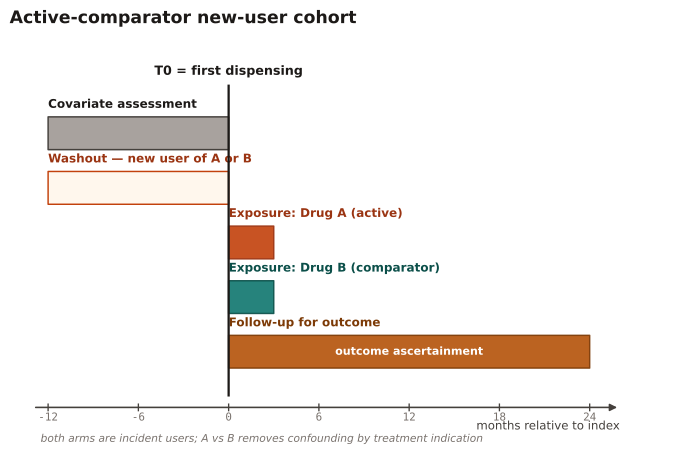
The active-comparator new-user cohort drawn in the Schneeweiss/Gatto convention — assessment, exposure, and follow-up windows anchored on a timeline so the design's temporal logic is explicit.
When estimating the comparative effect of two active treatments. Anchoring both arms at first dispensing of either drug, among incident users, removes confounding by treatment indication and the healthy-/sick-user distortions of an untreated comparator.
Both exposure arms start at the same time-zero (first dispensing); the covariate window is strictly pre-index and the washout requires no prior use of EITHER drug, so the contrast is between comparable new users of A vs B.
A two-arm comparison of Drug A versus Drug B initiators, both incident users, with a 12-month pre-index covariate/washout window and 24 months of outcome follow-up from time zero.
Result: Both arms are anchored at first dispensing and share an identical pre-index window, so the diagram shows there is no immortal time and no indication asymmetry — the A-vs-B contrast is fair.
Reference: Schneeweiss S, Rassen JA, Brown JS, et al. Graphical Depiction of Longitudinal Study Designs in Health Care Databases. Ann Intern Med. 2019;170(6):398-406.