Test-Negative Design Diagram
The test-negative design drawn in the Schneeweiss/Gatto convention — assessment, exposure, and follow-up windows anchored on a timeline so the design's temporal logic is explicit.
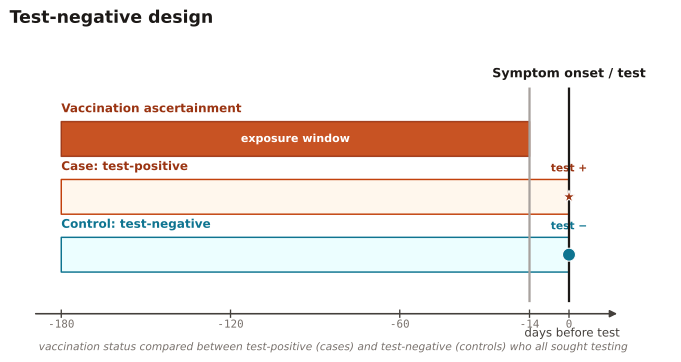
The standard design for vaccine effectiveness: among people who present for testing with the same symptoms, compare prior vaccination between those who test positive (cases) and negative (controls), which controls health-care-seeking behavior.
Both cases and controls are symptomatic patients who sought testing; vaccination is ascertained in a window ending before symptom onset. Restricting to the tested population balances care-seeking — the key confounder in vaccine studies.
Symptomatic patients are tested; vaccination status (ascertained ≥14 days before onset) is compared between test-positive cases and test-negative controls.
Result: Because cases and controls are both drawn from people who sought testing, the diagram shows how the design holds health-care-seeking behavior constant — its central advantage for estimating vaccine effectiveness from routine data.
Reference: Schneeweiss S, Rassen JA, Brown JS, et al. Graphical Depiction of Longitudinal Study Designs in Health Care Databases. Ann Intern Med. 2019;170(6):398-406.