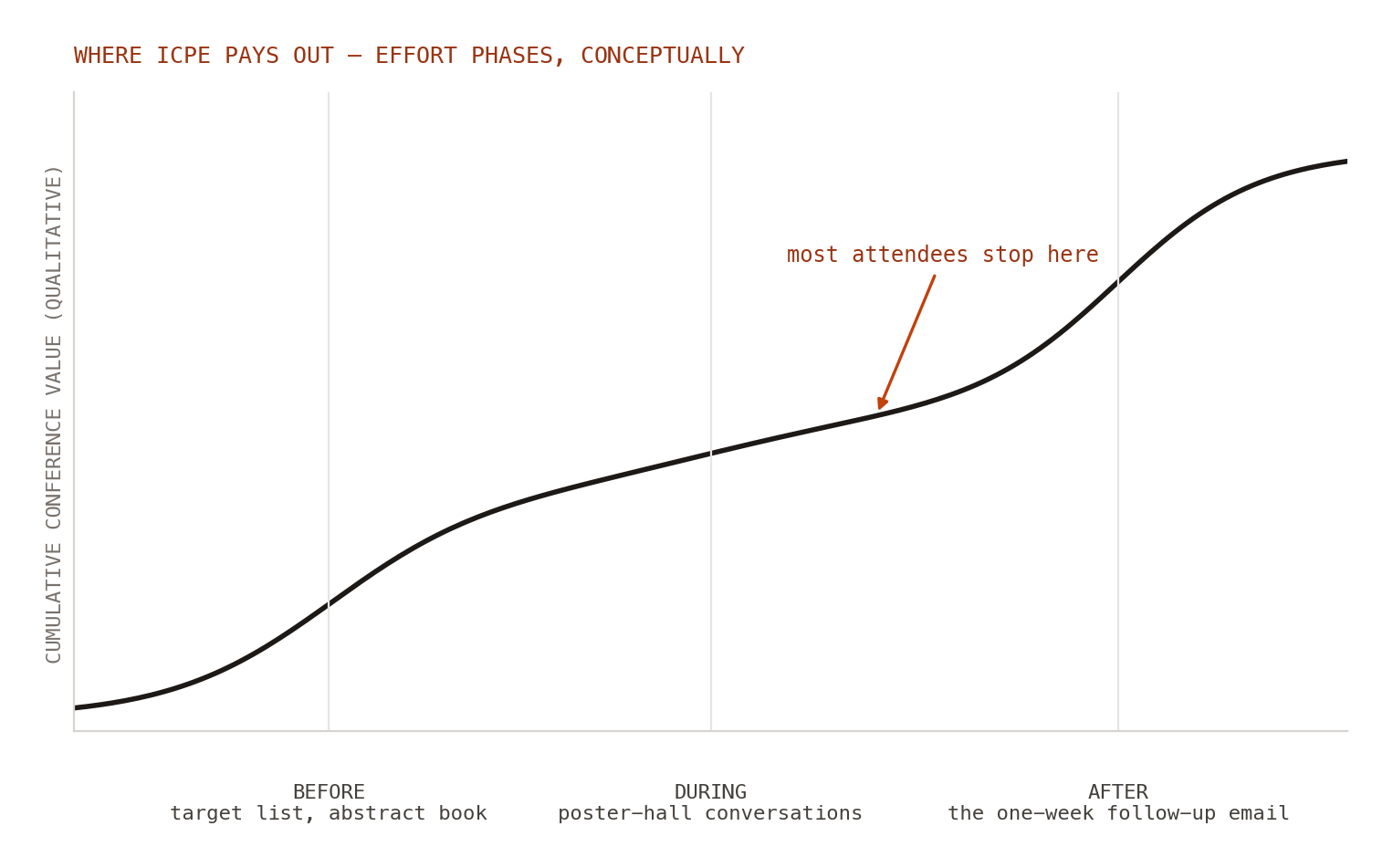
ICPE lands in Milan this year — August 29 through September 2, the 42nd edition of pharmacoepidemiology's annual family reunion, with attendance expected around two thousand.[1,2] Abstract submissions closed February 12,[1] which means roughly now is when accepted presenters shift from "we got in!" to "oh no, we have to say something." Having watched students, mentees, and frankly myself extract wildly different returns from the same conference over the years, here is the field guide I wish someone had handed me.
The poster hall is the conference
The plenaries are fine. The symposia are fine. But the unit of value at ICPE is the fifteen-minute poster conversation with the one person on earth who has fought your exact methodological problem — the person who knows why your negative control outcome misbehaves in Nordic registry data, or what CPRD does to your new-user cohort that Optum does not. That person is standing in the poster hall, mildly jet-lagged, wearing a lanyard, hoping someone asks them a real question.
So: read the abstract book before you fly. Build a target list — ten posters, five people, three methods questions you genuinely need answered. This converts the conference from ambient content consumption into a series of small, high-yield consultations. Nobody regrets over-preparing a conference; everybody regrets wandering.
For presenters: your poster is a conversation starter, not a document
The poster that works is the one a tired epidemiologist can parse from 1.5 meters in ten seconds: one question, one design figure, one result, one honest limitation. The design figure matters most — in this field, your time zero, eligibility, and follow-up windows are the study. (If your poster's methods section is a wall of 9-point text describing your propensity model, I will assume the design has something to hide. So will everyone else.)
And prepare the 30-second and 3-minute versions of your story separately. The 30-second version earns the 3-minute version. The 3-minute version earns the coffee.
For students and early-career attendees
Three specific tactics. First, cold introductions work better here than almost anywhere in science — this community is small, methods-obsessed, and remembers being students. "I used your method and something weird happened" is the single best opening line available to you; deploy it. Second, attend at least one session in a subfield you know nothing about — vaccine safety if you do oncology, signal detection if you do comparative effectiveness. The methods cross-pollination is where half the good dissertation ideas come from. Third, the follow-up email within a week — referencing the specific conversation, asking one concrete question — is worth more than fifty LinkedIn connections. The conference does not end when you fly home; it ends when you have either converted conversations into collaborations or let them evaporate.
The meta-point
Conferences are one of the last non-automatable parts of this profession — which, in the year of the agentic systematic review, is precisely what makes them more valuable, not less. A model can screen your abstracts. It cannot stand in a Milanese convention hall at 5 p.m. discovering that the person whose estimator you have been misusing for two years is delightful, three feet away, and willing to look at your code. Spend accordingly.
See you in the poster hall. I will be the one asking about your time zero.