Case-Crossover Design Diagram
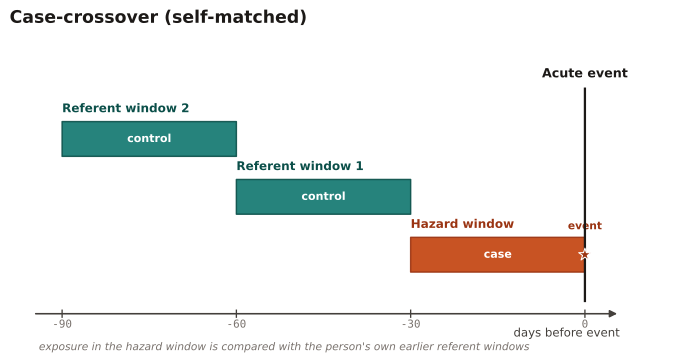
The case-crossover (self-matched) design drawn in the Schneeweiss/Gatto convention — assessment, exposure, and follow-up windows anchored on a timeline so the design's temporal logic is explicit.
For abrupt outcomes with transient exposures (e.g., a drug taken intermittently and an acute event). Each case serves as its own control, so all stable confounders (genetics, chronic comorbidity) are automatically matched.
The hazard window immediately precedes the event; referent windows are earlier periods in the SAME person. Exposure prevalence is compared between hazard and referent windows — time-fixed confounders cancel by self-matching.
A patient has an acute event at day 0; the 30-day hazard window before it is compared with two earlier 30-day referent windows in the same person.
Result: Self-matching means every time-fixed confounder is held constant; the diagram makes clear the only comparison is within-person exposure timing — though an exposure-time trend would still need a case-time-control extension.
Reference: Schneeweiss S, Rassen JA, Brown JS, et al. Graphical Depiction of Longitudinal Study Designs in Health Care Databases. Ann Intern Med. 2019;170(6):398-406.