Nested Case-Control Design Diagram
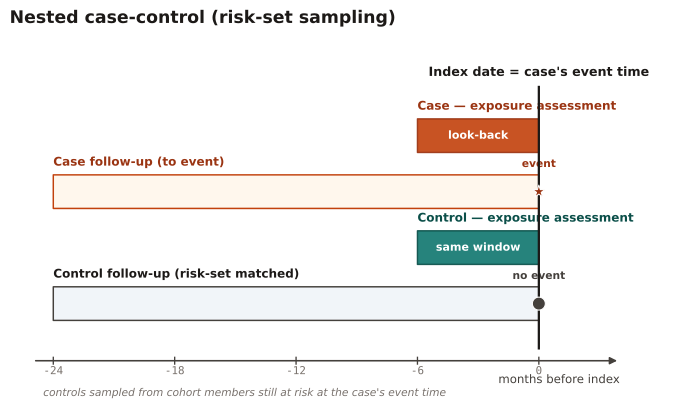
The nested case-control with risk-set sampling drawn in the Schneeweiss/Gatto convention — assessment, exposure, and follow-up windows anchored on a timeline so the design's temporal logic is explicit.
When outcomes are rare or exposure ascertainment is expensive: sample all cases plus a few controls per case from the cohort, preserving the cohort's validity at a fraction of the cost.
The index date is the case's event time; controls are sampled by risk-set sampling from cohort members still event-free at that time, and exposure is assessed over the same look-back window in both — so the odds ratio estimates the cohort hazard ratio.
A case experiences the event at the index date; a control is risk-set sampled at the same time, and both have exposure ascertained over the identical 6-month pre-index window.
Result: Because controls are sampled at the case's event time (risk-set sampling) with the same look-back, the diagram shows the design recovers the cohort hazard ratio without exposure look-ahead.
Reference: Schneeweiss S, Rassen JA, Brown JS, et al. Graphical Depiction of Longitudinal Study Designs in Health Care Databases. Ann Intern Med. 2019;170(6):398-406.